Giant clam farming, 2020 what's next?
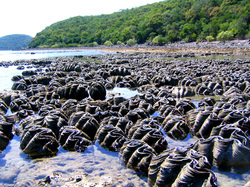
T.Gigas at Orpheus island 30 years later.
There are 2 species of large giant clams, T.Gigas & T.Derasa and 4 species of smaller giant clams, T.Squamosa, T.Maxima, T.Crocea & H. Hipopus , all equally suitable to be farmed for the seafood industry and considered as delicacies to Asian palates.
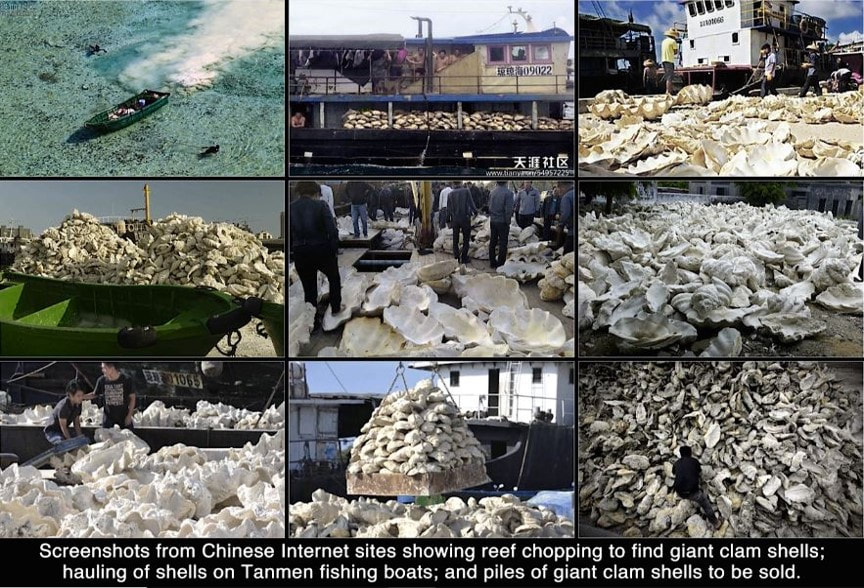
The adductor muscle of large clams was sought after in Taiwan decades ago and these species were poached to extinction in many parts of their natural range. This alarming situation initiated several research programs and intensive farming techniques were transferred to hatcheries in the Pacific region.
The Tridacna Mariculture Development Center has developed a special a special "proprietary" farming technique for giant clams which makes economic viable production of seed-clams possible for the huge Asian seafood market with the use of submerged floating "longlines" or by sowing millions of seeds directly on selected reef-flats for zero maintenance till harvest.
contact email: phildor@tmdc.info
The adductor muscle of large clams was sought after in Taiwan decades ago and these species were poached to extinction in many parts of their natural range. This alarming situation initiated several research programs and intensive farming techniques were transferred to hatcheries in the Pacific region.
The Tridacna Mariculture Development Center has developed a special a special "proprietary" farming technique for giant clams which makes economic viable production of seed-clams possible for the huge Asian seafood market with the use of submerged floating "longlines" or by sowing millions of seeds directly on selected reef-flats for zero maintenance till harvest.
contact email: phildor@tmdc.info